
Reserve Bank Governor Shaktikanta Das on Monday said with the country's foreign exchange reserves at $677 billion, it is comfortably placed to deal with any spillover effects and for financing of the current account deficit. Over the last three years, the country's foreign exchange reserves have surged by $270 billion. He said as per the latest data, the foreign exchange reserves are $622 billion.

Domestic financial institutions and mutual funds on Wendesday pitched for rationalisation of tax provisions to improve ease of doing business in the country.

Revenue department would come out with more clarifications through FAQs on the Undisclosed Foreign Income and Assets Act.

All-out efforts are needed to mitigate the adverse impact of the Covid-19 pandemic, and the RBI will use any instrument necessary to revive growth and preserve financial stability, according to the minutes of the central bank's policy meeting.

The country's foreign exchange reserves crossed the $600 billion mark for the first time after increasing by $6.842 billion in the week ended June 4, RBI data showed on Friday. The reserves surged to a record $605.008 billion in the reporting week, helped by a rise in foreign currency assets (FCA), a major component of the overall reserves, as per weekly data by the Reserve Bank of India (RBI). In the previous week ended May 28, 2021, the reserves had swelled by $5.271 billion to $598.165 billion.

The finance ministry has cautioned that global and regional uncertainties and domestic disruptions may keep inflationary pressures elevated in the coming months, warranting "greater vigilance" by the government and the Reserve Bank of India (RBI). "Russia's decision to terminate the Black Sea grain deal, along with dry conditions in major wheat-growing areas, caused a price spike in cereals. Domestic factors like white fly disease and an uneven distribution of monsoon exerted pressure on vegetable prices in India," the ministry said in its latest Monthly Economic Report for July, released on Tuesday. However, the report maintained, the recent price surge in certain food items "is expected to be transitory". "Tomato prices are likely to decline with the arrival of fresh stocks by the end of August or early September.

The economic affairs secretary said that the focus is on production and supply of Rs 500 and lower denomination notes.

...why are the government is running away from a Joint Parliamentary Committee
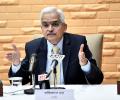
Reserve Bank of India governor Shaktikanta Das on Monday said payments through UPI (unified payment interface) have grown exponentially in the past 12 months with daily transactions crossing 36 crore, which is up 50 per cent from 24 crore in February 2022. In value terms, these transactions are worth Rs 6.27 lakh crore, registering a growth of 17 per cent from Rs 5.36 lakh crore in February 2022, the governor told reporters while launching the Digital Payments Awareness Week at the RBI headquarters in Mumbai this afternoon. He also said the overall monthly digital payment transactions crossed over Rs 1,000-crore-mark each month during the past three months.

Retail inflation jumped to a 15-month high of 7.44 per cent in July as prices of vegetables and other food items spiked, according to official data released on Monday. The Consumer Price Index (CPI) based inflation was at 4.87 in June and 6.71 per cent in July 2022. Previously, high inflation was recorded at 7.79 per cent in April 2022.

RBI's exercise will take into account standards of governance, the viability of the payment bank (PB) business model, and changes, if any, if needed.

The wholesale price-based inflation shot up to an all-time high of 10.49 per cent in April, on rising prices of crude oil and manufactured items. Also, a low base of April last year contributed to the spike in inflation in April 2021. The WPI inflation was 7.39 per cent in March 2021, and (-) 1.57 per cent in April 2020. This is the fourth straight month of uptick seen in the wholesale price index (WPI)-based inflation.

It is to be seen if SBI under Setty, who will have a three-year term, can ride the economic cycle to take SBI to new heights, navigating some of these challenges.

The Reserve Bank on Wednesday hiked key benchmark policy rate by 25 basis points to 6.5 per cent, citing sticky core inflation. This is the sixth time interest rate has been hiked by the Reserve Bank of India (RBI) since May last year, taking the total quantum of hike to 250 basis points. Announcing the bi-monthly monetary policy, RBI Governor Shaktikanta Das said the Monetary Policy Committee (MPC) by a majority decided to raise the policy repo rate by 25 basis points and keep a 'strong vigil' on inflation outlook.

Madhabi Puri Buch, the first female chairperson of Sebi, doesn't plan to rest on her laurels in her third and final year in office and has set out an ambitious goal, such as moving towards a same-day and instantaneous settlement cycle for the secondary market.

The RBI on Wednesday cautioned that while the Indian economy appears capable of weathering the deterioration in geopolitical conditions amid the ongoing Russia-Ukraine war, it faces headwinds from global spillovers from geopolitical tensions, elevated commodity prices and moderating external demand. The RBI, however, did not tinker with the GDP growth projection made in April. It had slashed the GDP growth projection for the fiscal 2022-23 to 7.2 per cent from its earlier forecast of 7.8 per cent.

The Indian rupee, which has depreciated 1.1 per cent so far in August, is expected to decline further on the back of a strengthening US dollar and a weakening Chinese yuan, according to a Business Standard poll of analysts. The Indian rupee hit an all-time low recently, closing at 83.15 per dollar. Five of the 10 respondents said the Indian currency might touch 83.5 per dollar in August itself, while others said the worst could be over.
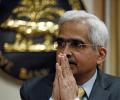
The RBI's rate-setting panel MPC on Monday began its three-day deliberation amid expectations of another round of hike in benchmark interest rates to contain inflation that continues to remain above the central bank's upper tolerance level. RBI Governor Shaktikanta Das will announce the decision of the Monetary Policy Committee after deliberations on Wednesday. Das has already indicated that there may another hike in the repo rate, though he refrained from quantifying it.

The Reserve Bank on Friday took steps towards normalisation of liquidity management to pre-pandemic levels, with the introduction of the standing deposit facility (SDF) as the basic tool to absorb excess liquidity, and narrowing the liquidity adjustment facility (LAF) to 0.50 per cent from the 0.90 per cent. Governor Shaktikanta Das said the SDF will be at 3.75 per cent, 0.25 per cent below the repo rate and 0.50 per cent lower than the marginal standing facility (MSF) which helps the banks with funds when required. The SDF has its origins in a 2018 amendment to the RBI Act and is an additional tool for absorbing liquidity without any collateral.

Tata Steel was the top gainer in the Sensex pack, rising around 4 per cent, followed by Infosys, Bajaj Finance, TCS, HCL Tech, ICICI Bank and Tech Mahindra. On the other hand, Bharti Airtel, M&M, L&T and Axis Bank were among the laggards.

The proposed bullet train will run between Mumbai and Ahmedabad.
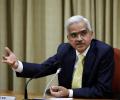
The Reserve Bank of India (RBI) on Friday decided to leave the benchmark interest rate unchanged at 4 per cent but maintained an accommodative stance, implying rate cuts in the future if need arises to support the economy hit by the Covid-19 pandemic.
Gold reserves were up by $1.525 billion in the reporting week to $37.625 billion.

The members of the Reserve Bank of India's (RBI's) Monetary Policy Committee (MPC) voiced different views on the interest rate and stance, with two of them indicating they may not vote for further rate increases even if Governor Shaktikanta Das and Deputy Governor Michael Patra maintain bringing down inflation as their primary objective, the minutes of the December review of the monetary policy showed. The other two members remained neutral. The MPC increased the policy repo rate by 35 basis points (bps) - which was lower than the previous three hikes of 50 bps. The repo rate has been hiked by 225 bps to 6.25 per cent since May this year.
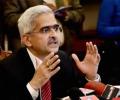
'No one cares about fiscal deficit now. Or for that matter, inflation.' 'The focus is on growth and growth alone.' 'RBI needs to break the risk aversion of banks and infuse adrenaline in their veins', says Tamal Bandyopadhyay.

Already retail inflation has risen to 6.07 per cent in February, crossing the upper band of the Parliamentary mandate. This is the second consecutive month in 2022 when retail inflation has crossed the 6 per cent mark having hit 6.01 per cent in January.
The Reserve Bank of India (RBI) on Wednesday raised the benchmark lending rate by 35 basis points to 6.25 per cent in a bid to tame inflation, which has remained above its tolerance level for the past 11 months. With the latest hike, the repo rate or the short-term lending rate at which banks borrow from the central bank now has crossed 6 per cent. This is the fifth consecutive rate hike after a 40 basis points increase in May and 50 basis points hike each in June, August and September.

Investors saw their wealth rise by more than Rs 3.96 lakh crore on Wednesday as stocks continued their rally for the second straight session amid the Reserve Bank reiterating its accommodative stance and easing concerns over the Omicron variant of the coronavirus. The 30-share Sensex soared 1,016.03 points or 1.76 per cent to close at 58,649.68 and all the constituent stocks, except for two, closed in the green. Most of the rate-sensitive auto, banking and realty stocks registered gains during the day's trade. While the BSE Auto index rose 2.24 per cent, BSE Bankex went up 1.61 per cent and BSE Realty spurted 1.72 per cent.

Reserve Bank of India on Thursday said a centralised portal would be ready in three to four months wherein depositors and beneficiaries can access details of unclaimed deposits across various banks. As of February this year, about Rs 35,000 crore of unclaimed deposits were transferred to RBI by public sector banks in respect of deposits which were not operated for 10 years or more. "In order to improve and widen the access of depositors/beneficiaries to such data, RBI has decided to develop a web portal to enable search across multiple banks for possible unclaimed deposits based on user inputs," RBI Governor Shaktikanta Das said while announcing the first bi-monthly monetary policy for the current financial year.
The Reserve Bank of India's rate-setting panel on Wednesday began its three-day deliberations on the next bi-monthly monetary policy amid expectations of at least a 35-basis-point hike in the interest rate to check high inflation. If raised, it will be the third consecutive hike in the repo rate -- the short-term rate at which the RBI lends money to banks. The central bank has already announced to gradually withdraw its accommodative monetary policy stance.

Finance Minister Nirmala Sitharaman on Tuesday asked banks and other financial institutions to ensure that their customers must update nominees to help resolve the problem of unclaimed money in future. "I want the banking system, the financial ecosystem including the mutual funds, stock markets to keep in mind that when someone deals with his (customer's) money, the organisations will have to think about the future and ensure that customers nominate their heirs, give the name and address," Sitharaman said speaking at the Global Fintech Fest (GFF) in Mumbai. According to a report, the banking system alone has more than Rs 35,000 crore of unclaimed deposits, while the overall quantum of the unclaimed money is said to be more than Rs 1 lakh crore.
The Reserve Bank of India's rate-setting panel on Wednesday started discussions to firm up the next bi-monthly monetary policy amid expectations that it might retain status quo on interest rate but change its monetary policy stance amid rising inflation on account of geopolitical developments.

Growing up in the Mumbai of 1970s, Uday Kotak aspired to be a cricketer and trained under legendary coach Ramakant Aachrekar. However, it was an on-field injury which resulted in a shift to finance. He started off with bill discounting, turned to lending and successfully applied to start a universal bank in the first decade of the millennium, as India was warming up to private play in banking.

Probably 35 bps. There could be even an encore in February 2023 to take the policy rate to 6.5% before the financial year ends, predicts Tamal Bandyopadhyay.

Sun Pharma was the top gainer in the Sensex pack, soaring around 6 per cent, followed by Kotak Bank, Axis Bank, IndusInd Bank, ICICI Bank, Dr Reddy's, Titan and TCS. NSE Nifty surged 121.35 points to 14,617.85.

Economists praise Das for his pragmatism and willingness to face challenges head on. And in doing so with the finesse of an able administrator.

As persources, Economic Affairs Secretary Shaktikanta Das will represent India at the 2-day event to be hosted in Islamabad from August 25-26.
Reliance Industries was the top gainer in the Sensex pack, rallying nearly 4 per cent, followed by Infosys, Tech Mahindra, HCL Tech, TCS and L&T.
The Reserve Bank will hold a special meeting of its rate-setting committee on November 3 to prepare a report for the government on why it failed to keep retail inflation below the target of 6 per cent for three consecutive quarters since January. The six-member Monetary Policy Committee (MPC) headed by RBI Governor Shaktikanta Das will prepare the report on reasons for failure to meet the inflation target as well as the remedial measures the central bank is taking to bring down prices in the country. "Under the provisions of Section 45ZN of the Reserve Bank of India (RBI) Act 1934... an additional meeting of the MPC is being scheduled on November 3, 2022," RBI said in a statement on Thursday.
This is not for the first time that the customers of the bank have faced service outage. In fact, the bank has been penalised by the Reserve bank of India (RBI) for two major outages in the past. In December, the RBI temporarily barred HDFC Bank from launching new digital banking initiatives and issuing new credit cards after taking a serious view of service outages at the lender over the last two years.
